


When you begin In Vitro Fertilization (IVF), much of your focus is naturally on the clinical steps: the medications, the monitoring, and the egg retrieval. But the moment your eggs are retrieved, the journey shifts to the heart of the fertility clinic: the embryology and biochemistry laboratory.
Handing over your future embryos requires an immense amount of trust. Understanding exactly how our embryologists and lab biochemists safeguard, nourish, and monitor your embryos can help bring peace of mind during the anxious waiting period.
Here is an exclusive look behind the laboratory doors.
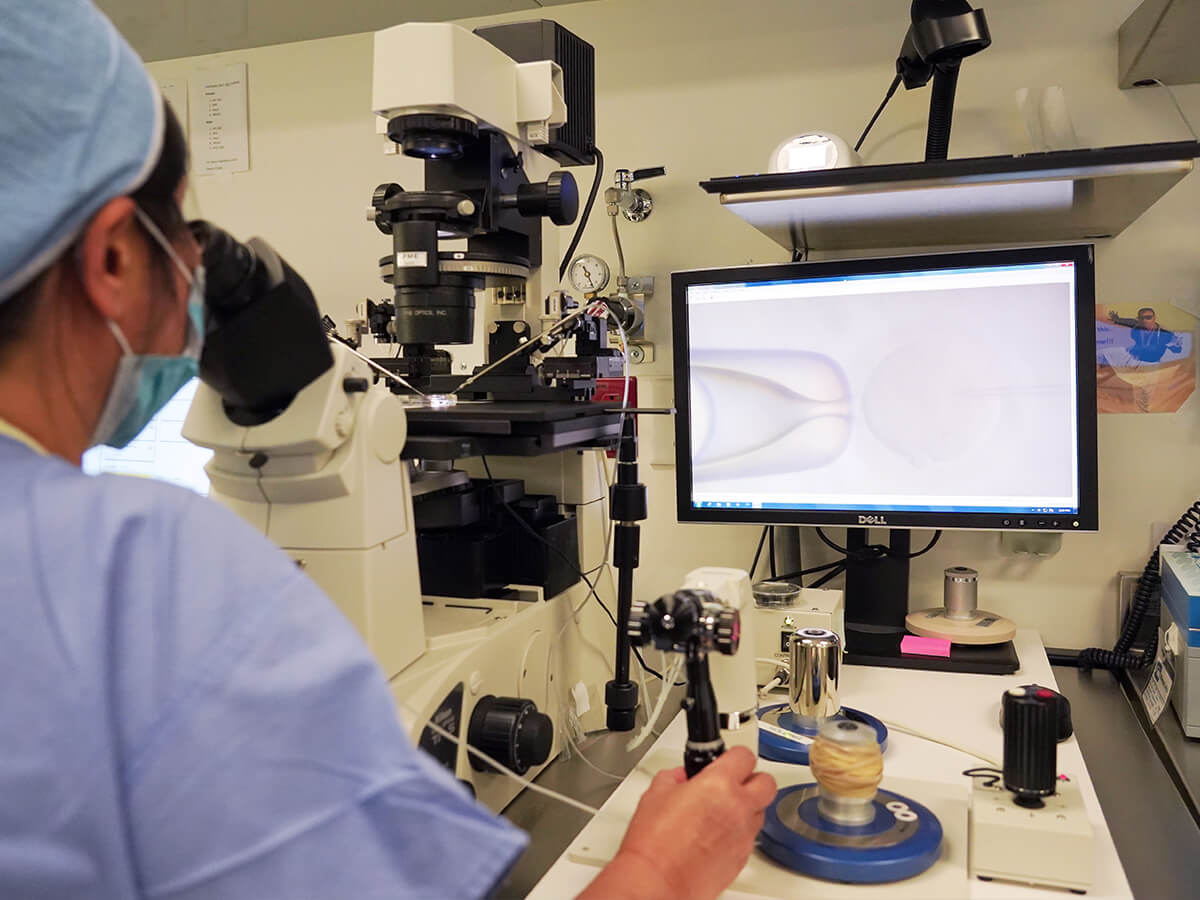
1. The Ultimate Cleanroom Environment
Embryos are incredibly sensitive to their surroundings. Because they lack the natural protective barriers of the human body, our laboratory must act as a perfect, artificial womb.
The lab is constructed as a highly specialized cleanroom. We utilize advanced HVAC systems with positive pressure and specialized HEPA and carbon filters to constantly scrub the air. This eliminates dust, microbes, and Volatile Organic Compounds (VOCs)—such as fumes from perfumes, cleaning supplies, or even outside pollution—that could be toxic to cellular development. Our embryologists adhere to strict protocols, wearing specialized scrubs, masks, and hair covers, and avoiding all scented products to maintain a completely sterile environment.
2. Mastering the Biochemical Environment: The Culture Media
An embryo cannot survive on just water; it requires a complex, dynamic “soup” of nutrients to divide and grow. This solution is known as culture media.
Our biochemists meticulously prepare and monitor these culture drops to ensure they mimic the fluids found naturally in the fallopian tubes and uterus. The media provides exact concentrations of:
-
Energy Sources: Such as pyruvate and lactate for early-stage development, transitioning to glucose as the embryo reaches the blastocyst stage.
-
Building Blocks: Essential and non-essential amino acids required for cellular division.
-
Macromolecules: Highly purified proteins that support structural integrity.
Crucially, the osmolarity (concentration of solutes) and the pH balance of this media are continuously calibrated. Even a microscopic shift in acidity can halt embryo development, so our team monitors these biochemical parameters relentlessly.
3. State-of-the-Art Incubation
Once the eggs are fertilized, they are placed into high-tech incubators. These are not standard warming ovens; they are sophisticated ecosystems designed to replicate the human body.
-
Temperature Control: Incubators are strictly maintained at exactly 37°C.
-
Gas Regulation: Embryos require a very specific balance of gases to thrive. We use tri-gas incubators that precisely blend Carbon Dioxide (CO2) to maintain the pH of the culture media, along with reduced Oxygen (O2) levels that mimic the low-oxygen environment of the reproductive tract, protecting the cells from oxidative stress.
Many modern labs also utilize time-lapse incubation technology. Instead of taking the embryos out of their controlled environment to check them under a microscope, built-in cameras take photos every few minutes. This allows our embryologists to monitor the exact timing of cellular divisions without ever disturbing the embryos’ delicate environment.
4. Vitrification: The Art of Cryopreservation
If you choose to freeze your embryos for future use (or while awaiting genetic testing results), our lab utilizes an advanced ultra-rapid freezing technique called vitrification.
Because embryos are mostly water, slow freezing can cause jagged ice crystals to form, which act like microscopic needles that can rupture the cell membranes. Vitrification solves this. Our embryologists carefully replace the water inside the embryo with a specialized biochemical solution called a cryoprotectant. The embryo is then plunged into liquid nitrogen, flash-freezing it so quickly that it enters a glass-like state, entirely avoiding ice crystal formation. This exact science results in exceptional survival rates when the embryos are eventually thawed for transfer.
Unwavering Dedication to Your Future Family
The embryology lab is where science meets life. Every temperature check, pH calibration, and microscopic observation is performed with the profound understanding that we are caring for your future family.